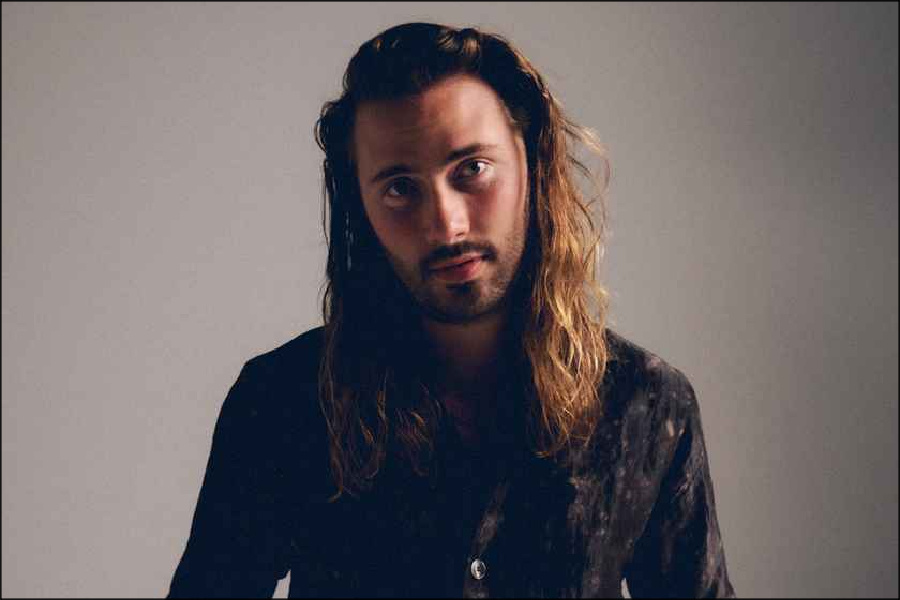
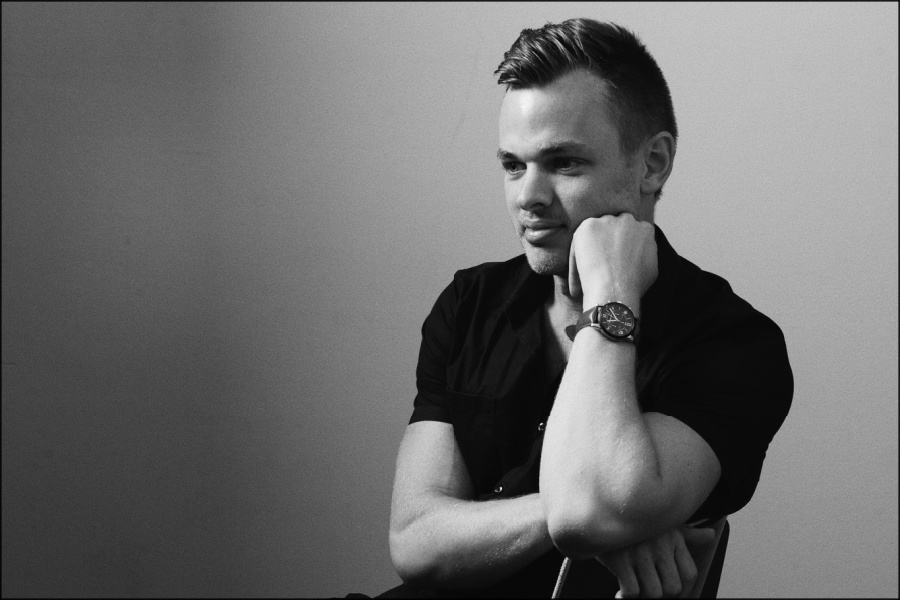
Colorado natives in Page CXVI have stated their mission to make hymns widely accessible again, and they have pursued that goal with creativity and passion. Taking their name from a passage in one of C.S. Lewis's installments of
The Chronicles of Narnia, the group clearly has a unique and vibrant approach to making music. Their latest project is a collection of hymns, many of which were arranged by fellow artist Derek Webb. NRT's Bill Lurwick talked with band members Dan Stockton, Reid Phillips, and Latifah Phillips about their creative process and the correct pronunciation of their unusual name.
Dan, tell us about Page CXVI. How did you guys get started and where are you from?
Most of us are from Colorado. Keith is actually originally from Houston. Reid and I grew up in Colorado, and we just met through some mutual friends. Latifah was playing with some people that I grew up with playing in college, and Reid met Latifah through Latifah’s old manager.
We were all living in southern California actually at the same time without knowing each other, and then we all moved back to Colorado around the same few months and met up and just decided that music was something we wanted to see if it worked together.
Can you tell me how we say the group name?
It’s either Page CXVI or Page 116.
I didn’t know my Roman numerals.
Most people actually don’t.
I was thinking it was actually Page 16, but it’s Page 116. The C is 100.
That’s correct.
Reid, what does that mean? What does the name Page 116 mean?
It’s actually a reference to
The Chronicles of Narnia: The Magician’s Nephew, and it’s basically the point in the book where all the characters are in this black void, and they begin to hear this sound of somebody singing. What they find out later in the chapter is that it’s actually Aslan singing Narnia’s creation, which as musicians we really liked.
Latifah, you guys say that you decided to recreate songs, making hymns more accessible. How’d you guys go about coming to that place?
I think for us it was just more about putting hymns in a format where we felt that the music would clearly translate what the words were saying. Not that there’s anything wrong with different styles of playing hymns, but we really wanted to put them in a format that people would enjoy listening to, but that also made sense with the lyrics.
On our version of “In Christ Alone,” we say no guilt in live. No fear in death. That’s a really elevated part of the song. Or even “How Great Thou Art” in the third verse: “when Christ will come with shouts of acclamation.” That’s actually one of the largest parts of the song because it feels triumphant and big instead of quiet and reflective.
We really just tried to match the music to the lyrics, and obviously we put it in a musical format that we enjoy currently. That was the approach for us. We just really wanted them to be accessible to people that maybe didn’t grow up with listening to hymns or also for people that maybe weren’t as inspired by just the words and an organ.
We really enjoyed it. It’s been a blast. We added choruses and refrains here and there too to kind of give us more moments of reflection sometimes. Often hymns move so fast through such good and rich content that we don’t have a moment to actually ingest what it’s saying. So that’s another approach that we’ve had too. Just kind of adding some reflective moments so that we can really just focus on what we just said.
Really meditate on that moment.
Yes, exactly.
I think that my favorite is actually “Be Still My Soul.” I remember when I first heard it, I just loved the beat. I loved that we can have more of a contemplative approach to it. It’s kind of slow moving and slow growing. I just love that Derek really dove in with this very driving, meditative, really rhythmic beat behind it, and it was a whole other way to approach focus I think, taking that steady beat through the whole song.
Looking forward to hearing it. Thanks for spending time with us at New Release Tuesday.
Thank you.