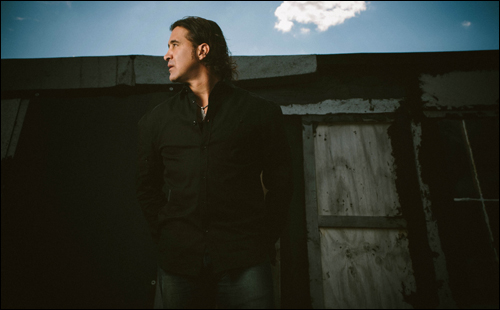
From a worldly perspective, it's tough to beat the heights to which Scott Stapp, the unmistakable voice of rock band Creed, rose. Selling nearly 30 million albums, seeing 18 singles climb the charts, touring the globe and winning four American Music Awards and a Grammy is for many, the definition of "making it."
But behind it all was a pursuit of love and peace, one that began out of Stapp's fundamentalist, performance-based dysfunctional family of origin. When money and fame didn't satisfy that need, Stapp turned to drugs, alcohol and ego—which Stapp said was the most powerful drug of them all.
His struggles culminated in a drug-fueled near-death experience on a 15th story balcony in Miami that, by Stapp's account, should have killed him. And that new lease on life is Stapp's "proof of life"—his undeniable sign from God that He is real and He loves unconditionally.
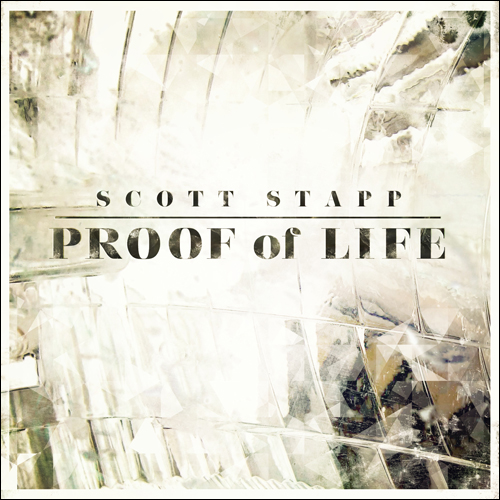
That perspective has since rocked Stapp's world, and it's become his personal mission to share the good news of God's love the only way he knows how: through music. Stapp's second solo album, Proof of Life, is the synthesis of his faith journey up to now.
In the first of our two-part interview, Stapp took a few minutes to talk about the new album, the lessons he's learned, and his new lease on life.
Happy release week! So how are you feeling coming into release week? Do you almost feel like you're starting over?
Absolutely. I absolutely feel like I'm starting over. Part of me is like, "Why can't I get that blind confidence that I had in '93 and '94 and '95 and '96?" where I just knew that it was going to connect with people. Failure was not even a thought.
Now I'm 40 and I've lived a lot of life and experienced a lot of things. Yes, I have that anticipation like it's Christmas and you're 7 years old, but also just that wonder that I really hope this music connects. It's a mixture of feelings, but they're all good. I wouldn't be alive if I didn't have any nervousness.
You had your hand in virtually every element of this album. How has this been different for you this time around?
I think it just gives you a lot more to worry about. With this process, it actually put a lot more on my plate to be there a lot more hours working, but essentially the same process, just having to be there while it's tracked. Then one thing that I really appreciated about it was being able to spontaneously create and add on and take away during that process. That was exciting.
What about the writing of this record? How's that different?
My mentality in approaching the writing of this record comes from a place of wanting to share this music and this soundtrack to my journey and my odyssey in life with others.
You have such a gratitude and a thankfulness that you're still able to do this and that there are those out there that want to hear your music. I think that earlier on in my career it was more about having these feelings I wanted to share and that people need to hear me. I was fighting so many demons early on in my career and I'm not fighting demons anymore. I've reached a resolution in my life.
I don't have to fight those battles anymore and that's what this record really symbolizes in my life. I found someone else to fight those demons and battles for me and I want to share what I've found and how I got there and where I am today.
When you find someone else who will fight those battles for you and it's bringing joy and peace and love in everything that you do, you want to share that with everybody. It's like finding a cure. If someone found a cure for cancer, they'd be jumping, shouting from the rooftop. "I got it! I got it!" That's the place I am musically and in my life. I really feel I've learned a lot in this journey and through this resolution and through this period.
I just want to share how I made it through in hopes that anyone else out there going through things can connect, and also that it would stimulate discussion and conversation—everything that art does. I really finally feel that I've really found my identity and myself as an artist and this record is the beginning of a new season in my life. I'm very excited about it.
Jumping off of that, you've been making music for so long now, what does it mean to you now? How is it different for you at this stage in life? The music itself, the catharsis of creating it and sharing it... what does that mean to you now in light of even the last few records you've made?
I really think I have a different view on what music is in my life and what music does for me than I ever did before. Music has been something that has been a part of my survival as a human being in a physical realm and my survival on a spiritual level and on a metaphysical level.
I really have an understanding of that now and really have a respect and a deep appreciation and love for what music can do for a human being and what it's done for me.
I kind of feel like I'm now an O.G. in the rock scene. I'm an older guy who's been through it all and seen it all. I'm sure I'll see more, but up to this point I really feel like I've seen it all. My perspective on everything is completely different, but it's so refreshing and it's so new. It's a total rebirth. I'm really, really excited about what this record stands for now and then the chapter that it's closed and what lies ahead in the future.
You've gone from being very symbolic and very metaphorical to being very overt with what you're trying to get across. There are so many truths that you're communicating in the album. You've said the song "Who I Am" is about ego. We're living in a time where narcissism is at an all-time high just in the general population. What have you learned about ego that may go under the radar for so many people?
"Who I Am" is my attempt to embody the character of ego, to give ego as I understood it and as it related to me a voice and a personality, so I could really try to reflect on it and understand it. I think the biggest thing that I see with ego is it's isolating people. It prevents others, it prevents all of us from taking that huge step, which is so human, which is to ask for help. Ego can be the bully, but ego can also be the bullied with no voice who doesn't say anything.
It's taking on many different shapes and many different forms and it's a demon. All ego wants to do is to kill and destroy and just like everything that's a temptation in life, it doesn't start off that way. That's the trick that pulls you in and then it keeps pulling you deeper and deeper and deeper and deeper until it kills you.
It's a sad state of affairs when ego replaces humanity, when ego replaces compassion, when ego replaces love, because what that means is that we lose touch with reality and I think that's why we have so many crazy things happening in this world. It's because there's such a loss of touch with reality and our own human mechanisms and our own human compassion.
I think that's a direct demon that separates us from love, from understanding the love of God in my world. It's a beast and I think the only way to overcome that beast is to continually ask ourselves the question, "What Would Love Do?"
For Part 2 of the Scott Stapp interview, click here.