It happened six months ago as I was reviewing our monthly song submissions here at NewReleaseToday. Every month, I receive around 100 songs from artists around the world, asking us to listen, review, add to playlists, and share. I'm grateful we're even on their radar. And while most aren't quite ready for full coverage, I make it a point to respond to every submission–with encouragement and next steps to help them grow in their music ministry.
I love music, and when it's paired with the Gospel, it becomes something truly life-changing–something I want to continue to champion, develop, and shepherd. I also love artists and deeply respect the work and sacrifice it takes to pursue music ministry at any level.
But recently, something shifted–and it hit me deeper than I expected.
Almost overnight, AI-generated music flooded my inbox. After listening to music all day, every day for 25-plus years, I know what I'm hearing and seeing. The crisp, overly polished perfection. The barrage of content in a short amount of time. The lifeless visual consistency. At first, it showed up here and there, but then it began to dominate. More than 50 percent of submissions became obviously AI-generated, and I found myself growing increasingly frustrated, then angry, and eventually discouraged by how quickly things had changed.
To be clear, I'm not talking about autotune, MIDI, or synths. Those tools have shaped modern music for decades, and comparing them to this is simply wrong. I'm talking about nonexistent talent generating lyrics, melodies, rhythms–even vocals–from prompts. Computers are replacing humans in every aspect of the creative process. And then the living, breathing Gospel is layered on top of something completely fabricated and presented to listeners who don't know any better. That's not innovation. That's deception.
The scale of this shift is staggering–and it's already being documented.
Deezer was one of the first major digital service providers (DSPs) to respond publicly. Last year, Deezer reported that AI-generated music uploads increased from 10 percent of daily uploads in January 2025 to 28 percent by September 2025, with more than 30,000 AI-generated tracks uploaded every day. More recent reports indicate that the number has jumped to 40 percent of all submissions–roughly 60,000 tracks per day as of March 2026. That's nearly two million AI-generated tracks being uploaded every month. In 2025 alone, Deezer detected and tagged over 13.4 million AI-generated tracks.
And fraud is a major part of this story.
In June 2025, Deezer announced it would begin publicly labeling tracks that contain fully AI-generated content to combat fraud and improve transparency. They also reported that up to 85 percent of all streams of AI-generated music were fraudulent–bot-driven streams designed to manipulate royalty payouts. In response, Deezer moved to demonetize AI-generated content to protect payouts to real artists, a move that has not yet been widely adopted by other major platforms such as Spotify or Apple Music.
The cycle isn't hard to understand.
Creators are paying $10 a month for AI tools like Suno, which recently boasted about reaching two million paid subscribers, churning out hundreds of songs, and then deploying thousands of bots to stream those songs continuously across platforms. That generates small but scalable royalty income while also inflating visibility through artificially boosted numbers. Those inflated numbers fuel marketing claims, spark curiosity, and drive headlines–which in turn generate even more attention. It's a fake hamster wheel spinning out of control.
It's just now reaching litigation.
Last month, a man in the United States pleaded guilty to flooding DSPs with thousands of AI-generated tracks and then boosting them with bots, resulting in billions of streams. In just a few years, he generated over $12 million dollars in royalty payouts. AI made the music, and the audience. And it's happening on a wide scale.
What makes this even more concerning is that most listeners can't tell the difference. In blind studies, up to 97 percent of listeners were unable to distinguish AI-generated music from human-created music. But that doesn't mean they want it. More than half of Americans–52 percent–say they aren't interested in listening to AI music at all, even if it's produced by artists they already like. While curiosity remains high, the overwhelming majority of listeners want transparency. They want to know what they're listening to and the ability to choose.
And that's where everything breaks down.
I don't have a problem with AI-generated music. I have a massive problem with it not being labeled. Right now, it's being pitched, marketed, and playlisted right alongside human-created music with no distinction. I can't use Spotify the same way anymore–every few songs, I find myself questioning what I'm hearing. If half of the listeners would immediately opt out of AI-generated music when given the choice, then that feature should already exist.
Everyone knows what this entire system depends on: people not knowing.
If you're creating AI Christian music and intentionally choosing not to disclose it, the issue speaks for itself. Transparency becomes a disadvantage because it turns off listeners, limits platform support, and reduces exposure. So it's avoided. At its core, this isn't a technology issue–it's a truth issue. And the longer transparency is delayed, the more trust is eroded. That's what concerns me most. Not just the rise of AI, but the potential loss of trust in music itself–and the impact that loss could have on the Gospel message we're trying to share.
After that moment six months ago, I stopped opening our submission folder. It's still there, overflowing with hundreds of songs waiting for review, but I already know what I'll find. And honestly, it makes me sick to even think about going back. I've started questioning every new artist I come across. Is this real? Does this person even exist? I find myself digging through social media just to confirm there's a human behind the music. That instinct–to connect with another human–is deeply wired in us, and it's being disrupted in real time. It has shifted my perspective so quickly that I've genuinely feared it could destroy my love for music.
My only response has been to fight for human-generated content.
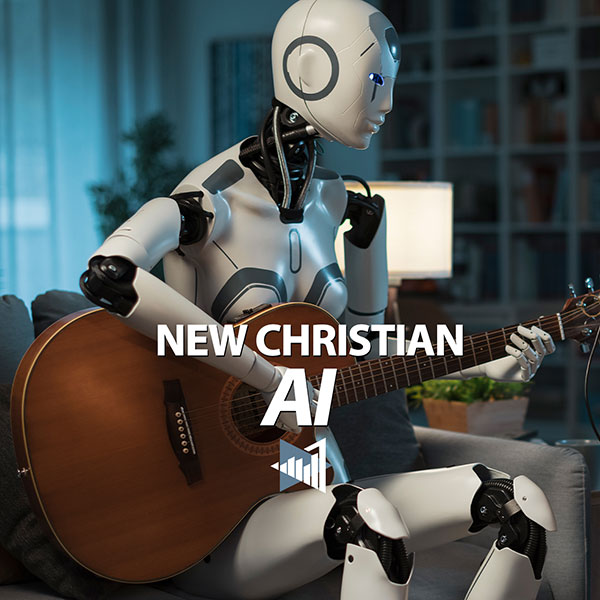
At NewReleaseToday, we've made a clear decision: we will not include, promote, or playlist AI-generated artists. There is one exception. We've created a New Christian AI Playlist–an A to Z catalog of artists who don't exist. If 98 percent of listeners can't distinguish what's real, we'll provide clarity. We're going to shine a light in a space where transparency is being avoided.
We're also encouraging our DSP partners to act. Fifty percent of listeners reject AI music immediately upon learning what it is, and that number is likely to grow. Platforms need to give users the ability to identify and filter AI-generated content. Trust is built on transparency, and without it, the entire experience begins to break down.
We're encouraging Christian radio to take a stand as well. Listeners don't want this, and when they find out, they will feel duped. There are too many deserving, hard-working artists who have poured their lives into their music to be replaced by something artificial. We need to put policies in place now.
And we're asking the Christian music community to amplify this message. Share it. Rewrite it. Make it your own. We may be a small corner of the community, but together, we have a voice that can influence real change.
This is a conversation we're just beginning. We'll continue exploring it through interviews, research, and editorial in the months ahead. If you want to contribute your perspective, we'd love to hear from you. You can email me at info@newreleasetoday.com.
For 24 years, we've stood for Holy Spirit-inspired content. We're not about to hand that over to anyone trying to build a following through prompts and deception.