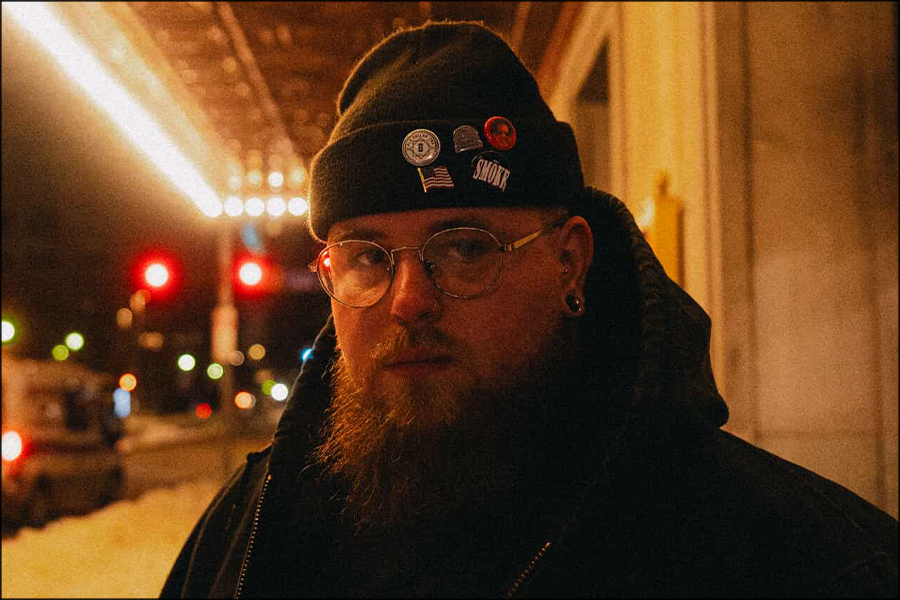
The thing about getting to know
Jason Gray is that you immediately want to share him with other people. In that way Jason is a lot like a good movie, or a great book, or some barely discovered band whose music makes you remember what it was you liked about music in the first place. Which brings us full circle, because Jason’s unique brand of emotional, thought-provoking, alternative-pop is that sort of music, and listening to it isn’t much different than having Jason Gray sitting in your living room and telling you what’s on his mind. In either case, you really wish there was someone else there to share it with.
When Jason inked a contract with Centricity Music in 2006 after a run of more than a decade as a hard-touring indie artist, he did so after a lot of soul-searching, wondering how his highly relational artistry would translate to a broader audience. Now with the release of his second studio album for Centricity,
Everything Sad Is Coming Untrue, that tension can probably be laid to rest. What emerges on the new project is a thought-provoking collection of artful, emotional and radio-friendly tunes that achieve a high level of accessibility without sacrificing any of Gray’s personality or creativity.
Produced by Jason Ingram & Rusty Varenkamp (Brandon Heath, Tenth Avenue North)
Everything Sad Is Coming Untrue blends carefully chosen elements of folk, alternative rock and even R&B into a seamless pop framework that showcases Gray’s strong and soothing vocals.
Bill Lurwick, host of NRT's New Christian Music Podcast, recently sat down with Jason to talk about the struggles he's had to overcome personally, physically and spiritually and how those experiences have prepared him for this very moment.
Thanks for joining us today Jason. Now, I know you’ve been out there talking a lot about your speech impediment and it’s such a huge part of your testimony, I wanted to spend a few minutes talking about it right up front.
Sure. I’ve had a speech impediment since I was little. I’m sure you can hear it. It complicated things, especially when I began to sense a calling in my life. I wondered how this would work. A lot of people are afraid because of their weakness, whether it's a handicap, an addiction or depression. They are afraid that they are disqualified from doing significant things. But there's a scriptural idea that His strength shines through our weakness.
His strength comes through.
Yes. If we really believe the Bible, then it is exactly the weak and the broken and the least likely that God is looking for. So my story that I get to bring to my audience is if you feel like you're weak, unlikely or damaged, be encouraged and be expectant because that's exactly who God loves to use. The virtues of weakness have been a big part of what I bring to those who listen to my music.
Is it difficult telling that story night after night? Does it ever get old?
No. It's a privilege because most people are so afraid and ashamed of their weaknesses. This speech handicap is a gift, and it's a very acceptable weakness that allows me to begin a conversation with my audience. It's obvious, and it's kind of humorous because I sound ridiculous a lot of the time. It's a great entry point that will hopefully lead to a conversation about more significant weaknesses, such as addiction, depression and shame.
I believe that God offers us this amazing opportunity, that when we bring all of our brokenness and weakness—-all that hell has thrown our way to destroy our lives—-to the Lord, He turns it around to use it against hell and to build His kingdom through us. It's such a sweet revenge to use hell's weapons against hell. Those things that you're most afraid to share with people...where do you think that fear comes from? It's probably hell—the enemy. So the best thing you can do is protest. Put it out there, and watch it work.
I just feel so blessed that I get to be the guy that comes and talks about that with my audience.
 I think you're definitely reaching into an area that hasn't been reached.
It's unique.
Yes, it's very unique. It's akin to Ginny Owens being blind.
I did a concert with her, over a weekend, about a year ago. I told her, “You can't see, and I can't talk; it’s going to be a disaster.” But it turned out to be a great weekend.
What an exceptional platform it is. I've talked to other artists, who have been through addiction struggles or something else, and I've asked them as well if it's been difficult for them to keep sharing that story. Every single one of them says no. Every single one of them says, "Are you kidding?" What a tremendous attitude and a tremendous thing for people to hear.
When you were growing up, what was the key to overcoming the self-image problem that comes with it?
I was thinking about that this week and about how, from very early on, I think most of us try to appear…
...as we aren't.
Yes, we try to look good to the world. We want to be attractive and cool. But every time I opened my mouth, it was obvious that something was wrong with me. It never gave me the opportunity to pretend I was anything besides broken. I see it now as a gift, and it protected me from developing a lot of those skills of trying to hide my imperfections. I always had to deal with it everywhere I went.
Mark Hall, the lead singer of Casting Crowns, once said to me that we go to church for an hour to an hour and a half every week. He said it's the only 60 or 90 minutes where everybody there actually thinks everything is okay, even though it's not. Everyone says, “Hey, how are you doing? Great to see you!”
It's kind of like being at an AA meeting.
Yes, I totally know what you mean.
My last record was about virtues and weakness. The new album I have coming out is called, "Everything Sad Is Coming Untrue", and one of the themes that we wanted to explore was the idea of confession, because of how [the bible] says, “confess your sins to each other and pray for each other so that you may be healed.” Often times, it seems that it's among other believers that we learn how to perfect hiding our sins from each other. Our weakness only remains a weakness until we bring it into the open where it can be redeemed and used by the Lord. These days, I'm talking to my audience and it’s hard for them to hear about weakness. I'm seeing it's harder to really dig deep into the idea of having to live with confession.
It's such a key. I went through some of this, in my own life, with one of my kids. We had to have her apologize to the parents and one of the siblings of another kid. When you’re going through it, you don't realize what the key is, but if you hold on to it and don’t make amends, it just eats you. The day after my daughter made amends, she said to my wife, "I am free today." The next day, she said, "I had the best day today." With most people, that's been lost. We really need to reclaim that, and that's what part of our relationship with Christ is about.
Right! I worked on a song with a guy whose worst sin was exposed on the news. When I asked about it, he agreed that it was terrible. But he is now free, and he doesn't have to pretend anymore. I've been intrigued by the gift of humiliation. I was reading the biography of St. Francis. The author believes that he was able to become St. Francis because he had come home from the war as a coward. It was that humiliation that set him free to become [St. Francis], because he didn't have to pretend to be anything else anymore.
Let's talk about the new record. There are certainly a few worship songs on this album.

I hope this isn't misconstrued, but I just don't enjoy a lot of worship music. Worship music really is not worship to me. It's just songs about worshiping. I have a friend who was a worship leader, and he resigned because he was wary about screwing up spiritual heroin every morning. That's a strong statement.
It is.
I wouldn't go that far, but I do understand what he means by that. It’s great to sing worship songs, but I think our most significant worship—because worship is bringing the Lord pleasure—is the way we live our lives.
It's not just the songs we sing.
Yes, the songs we sing are probably the least of it. And living in a Christian music culture, people think that they are worshiping when they listen to [the music]. But that's not worship.
Right, it's not like you turn it on and turn it off.
I've had this beef about worship music, but I wrote my first worship song. The goal was that I wanted it to be heard. Working in the Christian music industry, you can feel like you have a sense of the knowledge of the people because they do market research. You learn what songs work and what phrases work. It can feel so hard to tell the truth in that context. The challenge for me, and the person who I co-wrote this with, is how we use worship music language so that it means something new. So we tried to do that, and we wrote a worship song that asks, "Does our worship have hands? Does it have feet?" If we raise our hands high, do we also reach them out?
Another song on the album is called, “More Like Falling in Love.” It's about how we can tend to make our belief about our information—certain facts—our Christianity. But information has never changed my life, at least not the way that falling in love has.
You're part of The Rabbit Room (www.rabbitroom.com), an online community of artists. Why don't you tell us about that?
It's the brainchild of the amazing Andrew Peterson. It's a blogging collective that is meant to recapture the spirit of a room in a pub in England, [where people like] CS Lewis used to meet and talk art and faith. It was called the Rabbit Room.
Do you consider yourself a Christian artist or an artist that happens to be Christian?
I think I know what you're asking. I try not to think...Well, I think I might have a different calling than just being an artist. I think I have a pastor's heart, and when I work on songs, I'm thinking of the people I play to. I think the best way to be true to all of that is to be as true an artist I can be, with all my songs. I believe that Jesus deserves our best, and I reject the idea of songs being only a tool to God. I think music is so much more than a tool. I'm hopefully both, a Christian and an Artist.